
What Is a Chef's Knife? The Kitchen All-Rounder
The chef's knife is the most important knife in the kitchen. Blade shape, uses and the difference to a santoku and a general kitchen knife explained.
Contents

The Most Important All-Rounder
The chef's knife is the central knife in every kitchen. With a typical blade length of around 18 to 24 centimetres it covers almost every task: slicing vegetables, breaking down meat, chopping herbs and much more. If you own only one good knife, make it a chef's knife.
The Curved Blade
The characteristically curved edge allows a rocking cutting motion in which the tip stays on the board. That makes cutting down large quantities efficient and is easier on the wrist.
Related products from our range
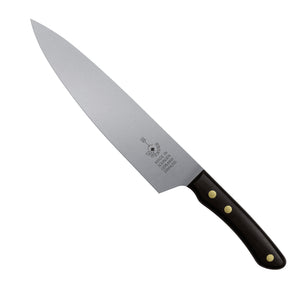
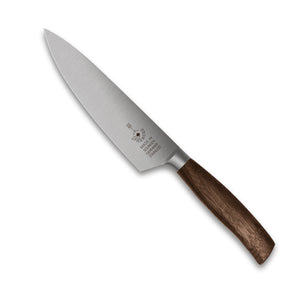
Chef's Knife, Kitchen Knife, Santoku – What Is the Difference?
“Kitchen knife” is an umbrella term for every knife used in the kitchen. The chef's knife is the large, curved all-purpose blade of European origin; the santoku is its Japanese counterpart with a straighter edge. All three terms overlap, but they refer to different levels of specificity.
What to Look For in a Chef's Knife
Good balance, a comfortable handle and a high-quality blade steel that takes an edge well are decisive. The knife should feel like an extension of your hand. With the right care, a good chef's knife will serve you for many years.
Frequently Asked Questions About the Chef's Knife
How long should a chef's knife be?
18 to 24 centimetres is standard. For smaller hands or kitchens a shorter blade is often more comfortable.
What is the difference between a chef's knife and a kitchen knife?
“Kitchen knife” is the umbrella term; the chef's knife is the large, curved all-purpose knife within that group.
Chef's knife or santoku – which is better?
Both are all-rounders. The chef's knife suits rocking cuts, the santoku straight ones – it comes down to preference.
More Glossary Articles
View all-

Why Good Knives Don't Belong in the Dishwasher
Heat, aggressive detergents and contact with other cutlery – why the dishwasher damages quality knives and how to clean them properly.
Why Good Knives Don't Belong in the Dishwasher
Heat, aggressive detergents and contact with other cutlery – why the dishwasher damages quality knives and how to clean them properly.
-

What Is a Buckelsmesser? A Solingen Tradition
The Buckelsmesser is a traditional Solingen kitchen knife with a distinctively curved blade spine. Its origin, shape and uses explained simply.
What Is a Buckelsmesser? A Solingen Tradition
The Buckelsmesser is a traditional Solingen kitchen knife with a distinctively curved blade spine. Its origin, shape and uses explained simply.
-

What Is a Paring Knife? Uses & Characteristics
Small, agile, indispensable: what defines a paring knife, what it is good for and how it differs from a chef's knife.
What Is a Paring Knife? Uses & Characteristics
Small, agile, indispensable: what defines a paring knife, what it is good for and how it differs from a chef's knife.


