
What Is a Santoku Knife? The Japanese Blade Explained
The santoku is the Japanese all-rounder for meat, fish and vegetables. What defines its blade shape and how it differs from a chef's knife.
Contents

“Three Virtues” – the Meaning of the Name
Santoku roughly means “three virtues” or “three uses” and refers to the three classic areas of application: meat, fish and vegetables. That makes the santoku the Japanese counterpart to the European all-purpose chef's knife.
The Typical Blade Shape
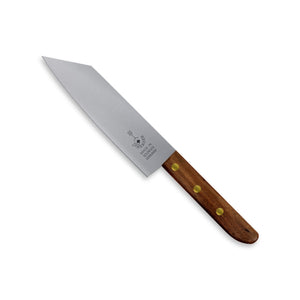
Its hallmarks are a relatively wide blade, a straight to slightly sloping spine and only a shallow curve to the edge. The blade is usually a little shorter than a chef's knife and ends in a distinctive, often rounded tip.
Related products from our range
Santoku vs. Chef's Knife
The European chef's knife has a more curved edge that favours a rocking cutting motion. The santoku is used more in straight, pulling or pushing cuts. Both are all-rounders – the choice mainly comes down to your preferred cutting technique.
Who a Santoku Suits
If you like straight, precise cuts and prefer a slightly shorter, easily controlled blade, a santoku is a good choice. Many santokus also have a granton edge – small hollows that reduce food sticking to the blade.
Frequently Asked Questions About the Santoku Knife
What does santoku mean?
Roughly “three virtues” – a reference to the three areas of use: meat, fish and vegetables.
What is the difference between a santoku and a chef's knife?
The santoku has a straighter, often shorter blade and is used in pulling cuts; the chef's knife in rocking cuts.
What are the hollows in the blade for?
The granton edge reduces food sticking to the blade.
More Glossary Articles
View all-

Why Good Knives Don't Belong in the Dishwasher
Heat, aggressive detergents and contact with other cutlery – why the dishwasher damages quality knives and how to clean them properly.
Why Good Knives Don't Belong in the Dishwasher
Heat, aggressive detergents and contact with other cutlery – why the dishwasher damages quality knives and how to clean them properly.
-

What Is a Buckelsmesser? A Solingen Tradition
The Buckelsmesser is a traditional Solingen kitchen knife with a distinctively curved blade spine. Its origin, shape and uses explained simply.
What Is a Buckelsmesser? A Solingen Tradition
The Buckelsmesser is a traditional Solingen kitchen knife with a distinctively curved blade spine. Its origin, shape and uses explained simply.
-

What Is a Paring Knife? Uses & Characteristics
Small, agile, indispensable: what defines a paring knife, what it is good for and how it differs from a chef's knife.
What Is a Paring Knife? Uses & Characteristics
Small, agile, indispensable: what defines a paring knife, what it is good for and how it differs from a chef's knife.


