

Carbon Vegetable- & Lettuce Harvest Knife
Product linkSKU:0317.155.WALNUT.W
Couldn't load pickup availability
- Shipping within Germany 4,95 € · free shipping from 150 €


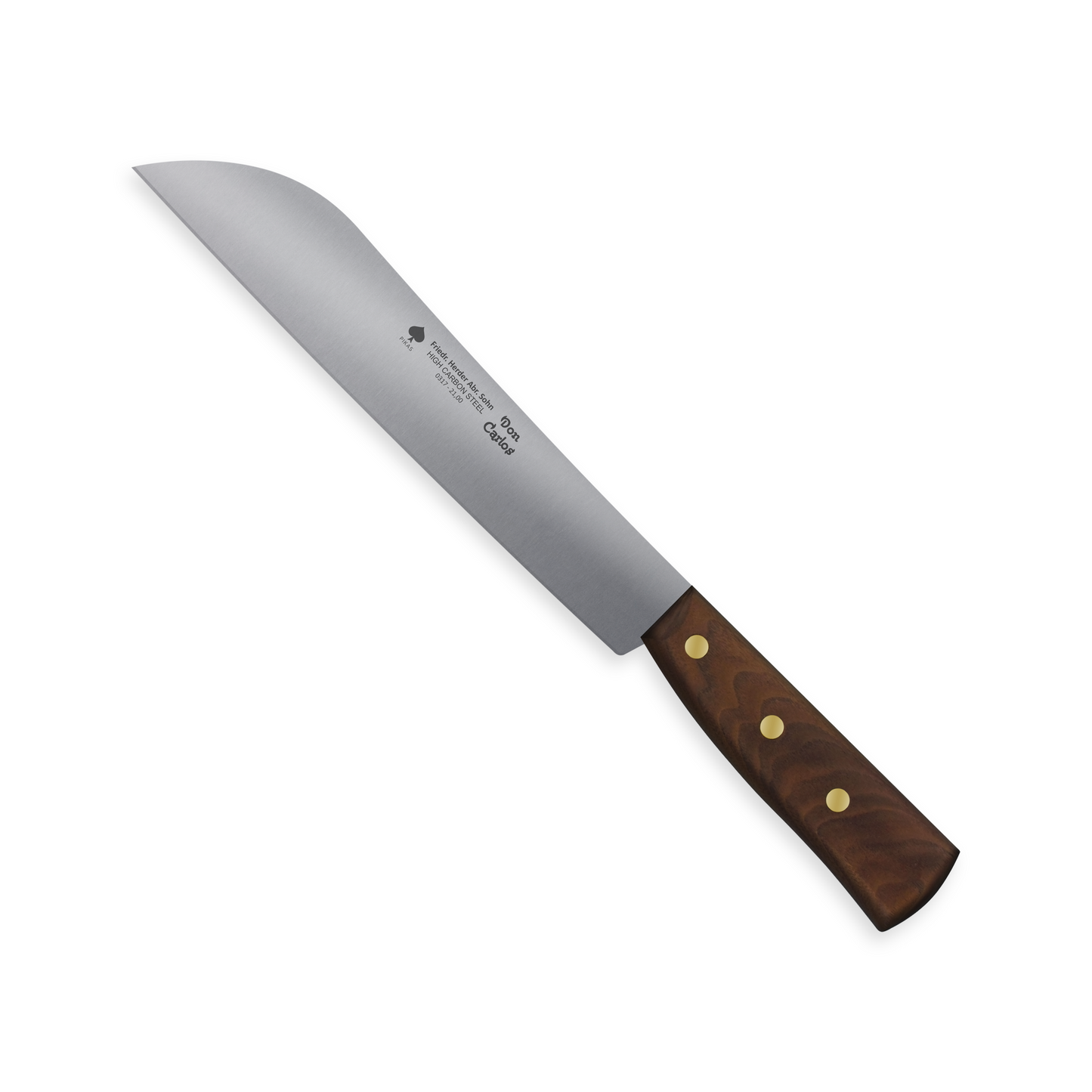

- Versatile use: Ideal for harvesting vegetables and lettuce
- Blade length 9–13 cm: Perfect for precise vegetable cutting
- Blade length 15.5–21 cm: Ideal for harvesting lettuce and salads
- Available in two versions: Serrated edge or Plain edge
- Sharp blade: Ensures clean and effortless cuts
- Ergonomic handle: Comfortable and secure grip
- Essential for hobby gardeners: Ideal for fresh, home-grown ingredients
The harvest knife is your versatile helper in the garden—perfect for harvesting crisp vegetables and fresh lettuce alike.
With blade lengths ranging from 9 to 13 cm, it’s ideal for precise vegetable harvesting, while the longer versions with 15.5 to 21 cm blades are perfectly suited for lettuce and salad harvesting.
The sharp carbon steel blade delivers clean, precise cuts, and the compact, ergonomic design fits comfortably in the hand. This makes harvesting not only efficient, but effortless.
An essential garden tool for hobby gardeners who value fresh, home-grown produce—from radishes to romaine lettuce.
42653 Solingen
Germany
0317.180.WALNUT.W
0317.210.WALNUT.W
0317.090.WALNUT
0317.105.WALNUT
0317.130.WALNUT
0317.155.WALNUT
0317.180.WALNUT
0317.210.WALNUT
Questions & answers
What is the difference between a vegetable harvesting knife and a lettuce harvesting knife?
A lettuce harvesting knife, by contrast, has a longer blade (15.5–21 cm) and is ideal for harvesting large-leaved lettuces quickly and cleanly.
Automatically translated
Show original
Was ist der Unterschied zwischen einem Gemüseerntemesser und einem Salaterntemesser?
Das Salaterntemesser hingegen besitzt eine längere Klinge (15,5–21 cm) und ist ideal, um großblättrige Salate schnell und sauber zu ernten.
What types of blades are available?
a serrated edge for firm or fibrous plants, such as cabbage and leeks,
and a plain edge for soft, delicate leaves, such as lettuce and herbs.
Automatically translated
Show original
Welche Klingenarten gibt es?
Wellenschliff für feste oder faserige Pflanzen (z. B. Kohl, Lauch)
und Glattschliff für weiche, empfindliche Blätter (z. B. Salate, Kräuter).
What material is the blade made of?
Important: carbon steel can develop a natural patina over time. This is normal and protects the blade against corrosion.
Automatically translated
Show original
Aus welchem Material besteht die Klinge?
Wichtig: Carbonstahl kann mit der Zeit eine natürliche Patina entwickeln – das ist normal und schützt die Klinge vor Korrosion.
Can the knife go in the dishwasher?
The blade could rust or become blunt.
Always wash by hand, dry immediately and lightly oil if necessary.
Automatically translated
Show original
Darf das Messer in die Spülmaschine?
Die Klinge könnte rosten oder stumpf werden.
Bitte immer von Hand reinigen, direkt abtrocknen und bei Bedarf leicht einölen.
How do I properly care for my harvesting knife?
This keeps the carbon steel blade sharp and protected against rust over the long term.
Automatically translated
Show original
Wie pflege ich mein Erntemesser richtig?
So bleibt die Carbonstahlklinge dauerhaft scharf und rostfrei geschützt.
Who is the harvesting knife suitable for?
The knife is perfect for harvesting vegetables, herbs and lettuce.
Automatically translated
Show original
Für wen eignet sich das Erntemesser?
Das Messer ist perfekt zum Ernten von Gemüse, Kräutern und Salaten geeignet.
Where is the harvesting knife made?
Automatically translated
Show original
Wo wird das Erntemesser hergestellt?
Ask a question
Customer reviews
No reviews yet. Be the first to write one!
Reviews marked “Verified purchase” come from customers whose purchase of this product has been checked. We do not check other reviews for a purchase.
